



 31 / 48

31
www.lycoming.eduT H E CO L L E G E
nce you see it, you never forget it. The viral video clip from the
documentary “Alive Inside” is of a patient named Henry. Henry
is an elderly African-American man who suffers from dementia
and spends most of his time hunched over in his wheelchair, quiet and
all-but-unresponsive. He has difficulty answering the most basic questions
and has trouble remembering anything — that is, until he hears music.
Once he’s given headphones and he listens to his favorite songs playing
from a tiny grey iPod, he’s instantly animated. His legs bounce, his eyes open
wide, his arms swing and he sings — he is, in a sense, brought back to life.
Henry’s case is just one of many that prove the health benefits of music,
which we’re learning more
and more about as time goes
on. These days, it seems like a
month doesn’t go by without a
new article detailing a research
breakthrough in the healing
power of the medium. One recent
story in Time Magazine (“This
is How Music Can Change Your
Brain”) touted the positive effects of music on the development of the
brain, another published by Reuters claimed that music can “bring troubled
families together.”
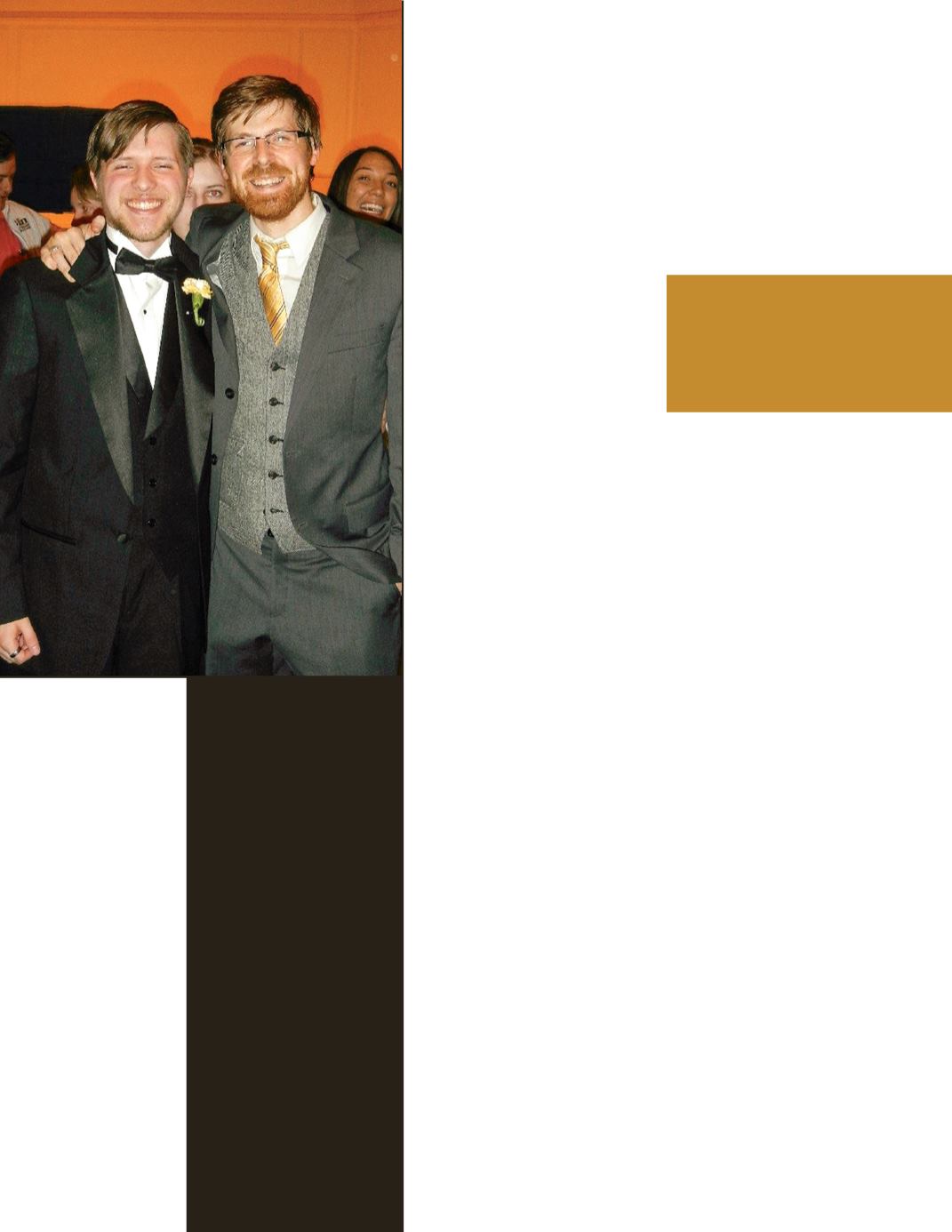
This is the kind of news that inspires Lycoming alumnus Tony
Rombola ’14, who recently began a career in music therapy.
“In my opinion, music therapy allows people to tap into the innate
understanding of music and express themselves using a medium that may
not be verbal or written,” Rombola said. “It is a way of expressing that does
not require the person to consciously think about feelings and standard
emotions. I think it helps people by allowing them a creative outlet for
their issues that are different than the typical learned behaviors.”
At Lycoming, Rombola majored in music and psychology. He was a
member of all three choirs, the concert and jazz band and worked on the
radio station as well. He says that during his time at the college, he learned
about much more than music.
“I feel that Lycoming taught me how to begin to understand people of
all walks of life and how to take the proper steps to approach and engage
in discussion with others whom I may not understand,” he said. “I learned
the level to which people were accustomed to expressing themselves and
how to begin to push them into further levels.”
After graduating, Rombola was able to find work in his field as a music
therapist in the People Helping People department at St. Gabriel’s Hall
in Audubon, Pennsylvania. He works to help students create music as a
means of expressing themselves and coping with their day-to-day lives.
“Our stance is that we should give hope, self esteem, and coping skills to
all of the kids that pass through our department,” he said.
Rombola plays a multitude of instruments, including the electric and
upright bass, several variants of the guitar, ukulele, something called a
“ipu heke” drum, sitar, accordion, keyboard, rababbah and ocarina, and
sings as well. He has been involved with music in some form or another
for fourteen years. But he says he couldn’t have gotten to where he is today
without Lycoming’s music department.
“I would like to extend my immense gratitude to the music department
for teaching me about more than just how to make music,” he said. “For
teaching me how to be an artist, allowing me to pursue my ideas and
encouraging them, and for giving me a new perspective on how others see
the world.”
•
Music
The
healing
power
of
Alumnus
Tony Rombola ’14
helps students
create to cope.
By Matthew Parrish ’06
O
“we should give hope, self
esteem, and coping skills
to all of the kids that pass
through our department.”