

 16 / 68

Today, most people don’t
visit their local tavern to
read the newspaper or listen
to a political debate. But in
Colonial America, the tavern
was a gateway to the outside
world and by default, often
became the local community
center. Tavern owners often
found themselves immersed
in town politics and
therefore thrust into military
leadership positions.
Discussions of cultural
aspects that influenced
Revolutionary War
soldiers, like tavern
ownership, are now
available on a new website,
parevolutionarysoldiers.com,
founded by Lycoming
College students in
October 2015.
“Details about everyday
life help us recreate the world
of the ordinary soldier,” said
Christopher Pearl, Ph.D.,
assistant professor of history
at Lycoming College, who
guided the student-led effort.
“The website showcases
the methodical attention
to detail our students give
their research and helps
them preserve and honor our
heritage.”
The website avoids the
typical overview of the war’s
events readily available in
other publications. Instead,
it aims for a more nuanced
view by offering short, well-
crafted biographies about
ordinary Pennsylvanians
who fought in the war —
where they came from, what
influenced their decision
to serve, and how they
supported military efforts.
The site also has short essays
that explore the historical
context of Pennsylvania in
the revolutionary era, such as
land disputes and rebellion
in 1760s Northumberland
County, and the impact of
Benedict Arnold’s treason on
the war effort and the morale
of the citizenry.
“We are very excited to
be sharing our hard-earned
research with the public and
providing a collaborative
venue for all students,”
said history major Maggie
Slawson ’17, one of the
site’s founders. “Students
from other majors have
helped us design, copyedit
and fact-check. Others are
encouraged to contribute
essays on important cultural
influences, like music,
literature, occupations and
leisure-time pursuits.”
Pearl praises the students’
innovative approach to
the site. “They plan to use
the latest technology to
add to current scholarship.
For example, they plan to
document where soldiers
lived using geographic
information systems software
(GIS) to pinpoint previously
unidentified historical
hot spots and to map the
Students are developing
the guidelines for submission
criteria, now open only to
Lycoming College students
and alumni, and will post
them on the website. The
project’s scope may change
in future years as the site
matures.
Alumni who have
Revolutionary War
memorabilia, are encouraged
to send a scanned copy or
a digital, high-resolution
photo of the object to pearl@
lycoming.edu. (Please, do
NOT send the object itself.)
If an electronic submission is
not possible, contact Pearl to
discuss. -
Miriam Mylin
A MELLON FOUNDATION GRANT EMPOWERS STUDENTS TO PRESERVE COLONIAL HERITAGE
dramatic mobility of veterans
in the post-war years.”
The website is the outcome
of a Mellon Foundation
research grant given to
the college to support
faculty-student research
in the humanities as part
of the college’s mission
to provide students with
career-enhancing academic
experiences. Pearl and his
students received a portion of
the grant.
For now, the website will
be dedicated to scholarship
about the history of the
period and the lives of
approximately 3,000
Revolutionary War soldiers
who applied for pensions
as Pennsylvania veterans.
Pearl expects students to add
nearly a dozen stories to the
site every year.
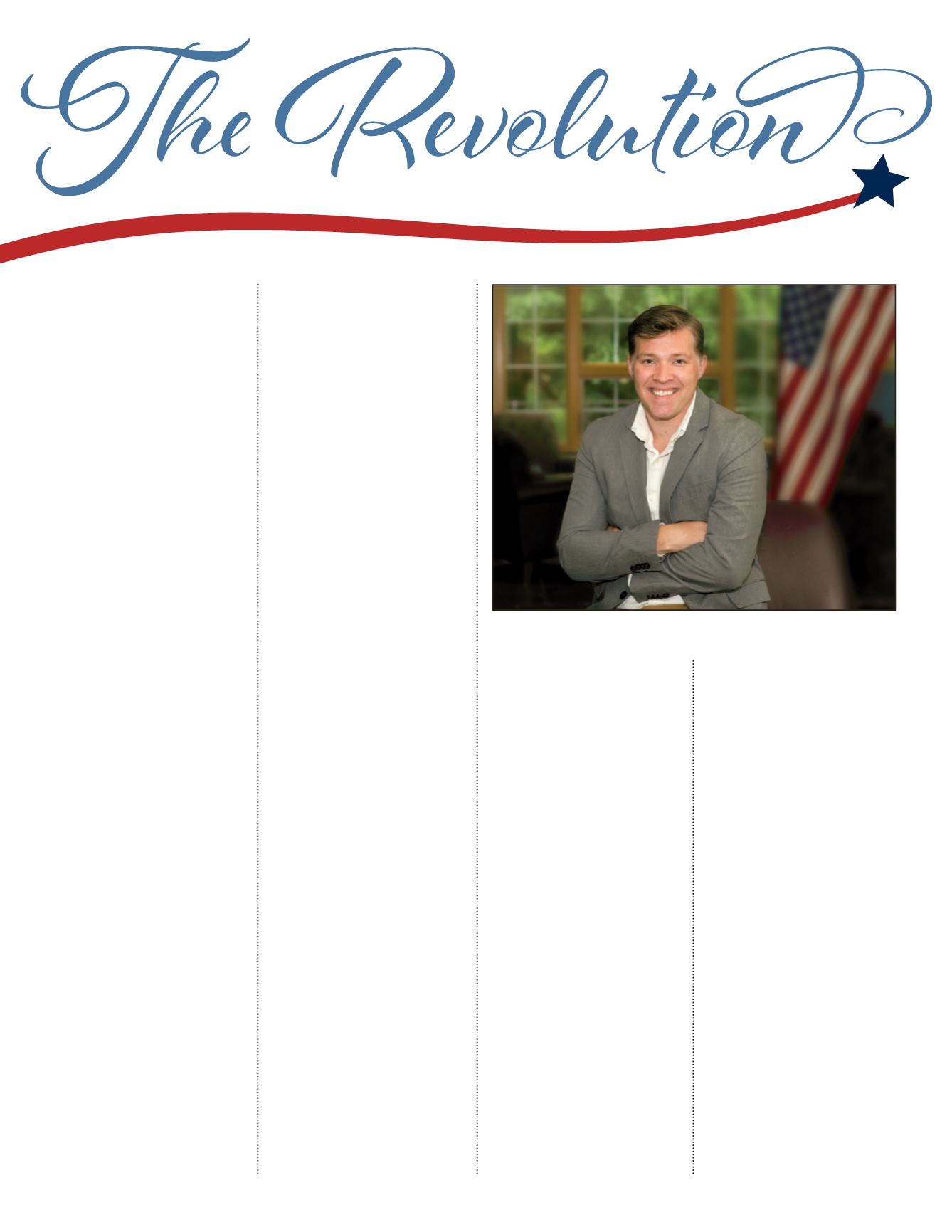
Christopher Pearl, Ph.D., assistant professor of history
16
LYCOMING COLLEGE 2016 SUMMER MAGAZINE
T H E CO L L E G E