



 20 / 48

20
LYCOMING COLLEGE 2015 SPRING MAGAZINE
T H E CO L L E G E
have always had important women in my life who have faced
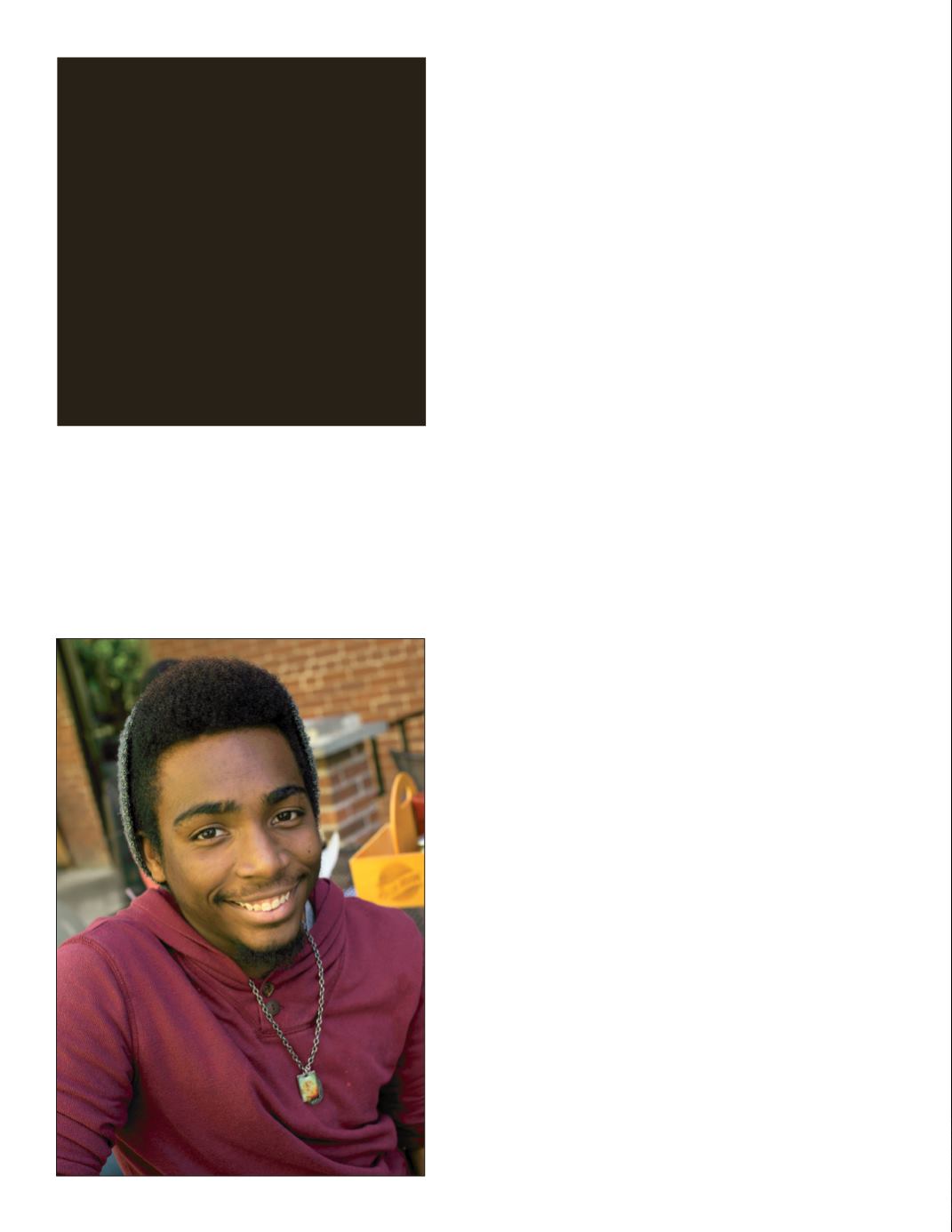
adversity,” said Nigel Semaj B., a junior in theatre at Lycoming.
“My mother battled drug addiction; my aunt had an autistic
child who suffered from frequent seizures. The play brought their
stories to life for me.”
Published in 1975, the Obie Award-winning play is “For Colored
Girls Who Have Considered Suicide/When the Rainbow is Enuf,” by
Ntozake Shange. Called a choreopoem by the author, you know right
away that you are not in the typical terrain.
“It’s a landmark in theatrical history,” explained Dr. N. J. Stanley,
associate professor and chair of the theatre program. “It’s eight
women of color who share their stories of heartache. It’s more of a
collage in a way and also a piece with movement and dance. It’s one
of those contemporary classics that have quickly become part of the
American canon, full of beautiful writing and very moving at the
same time.”
The play will have its run from April 8-11 in the Mary L. Welch
Theatre as one of the first student-directed productions at Lycoming
to appear on the main stage. “I’m thankful for the chance to put this
on at the Welch, and I think it is a mark of a new era for students
directing here,” said Semaj B.
The play will also be entered into the prestigious Kennedy Center American College Theater Festival.
The KCACTF is a national organization that promotes excellence in theatre at the college and university
level. Regional festivals are held each year that bring in theatre students for five-day intensives full of
workshops and other activities. “It’s a cool opportunity for students to see what kind of theatre is
happening around the region, and to interact,” Stanley said. “There is also a great chance for students
who attend to win scholarships for further study.”
In addition, individual college productions can be registered
and entered into a competition. Reviewers from KCACTF will
attend performances of entered productions and recommend the
best to festival organizers. The shows that are chosen remount their
performances in a one-night-only show at the festival and may be
selected to move on to the national competition.
Stanley is looking forward to the challenge. “It’s a huge obligation
if you are selected,” she said. “It’s expensive to enter, and if you are
selected for the regional, you have to transport and restage your entire
production, but it’s a big honor. This year, Lycoming is registering ‘For
Colored Girls.’ It’s the first time we have entered a student show in the
competition. We have the wonderful support of the provost and the
college, and we’re really excited.”
“It is a bit of a controversial play, but it’s a true play, a real play,” said
Semaj B. “I’ve looked at videos of some other colleges’ productions
of the play, and there is often anger and man-bashing emphasized. I
can’t connect that to what I think is the real essence of the play, which
is empowerment. In a sense, if you focus on the reaction to men, that
decreases the achievements of the women in overcoming adversity.”
Semaj B. takes a similarly expansive view of the race and gender
issues raised by the play, and of being a man directing a play by a
woman, and about the lives of women. “The main thing I figured out
is that men, women, white, black –– they don’t do evil things. Human
beings do evil things. When you remove gender or race, you can place
yourself in anyone’s shoes. The important thing about the play is that
it breathes truth into the ugliness of the world. Anyone who sees the
show will be able to connect with things in the play and find truth for
themselves in it.”
•
I
“
For
C
o
l
o
r
e
d
Girls...
Instant classic to be performed at
Mary L. Welch Theatre
By Chris Quirk